

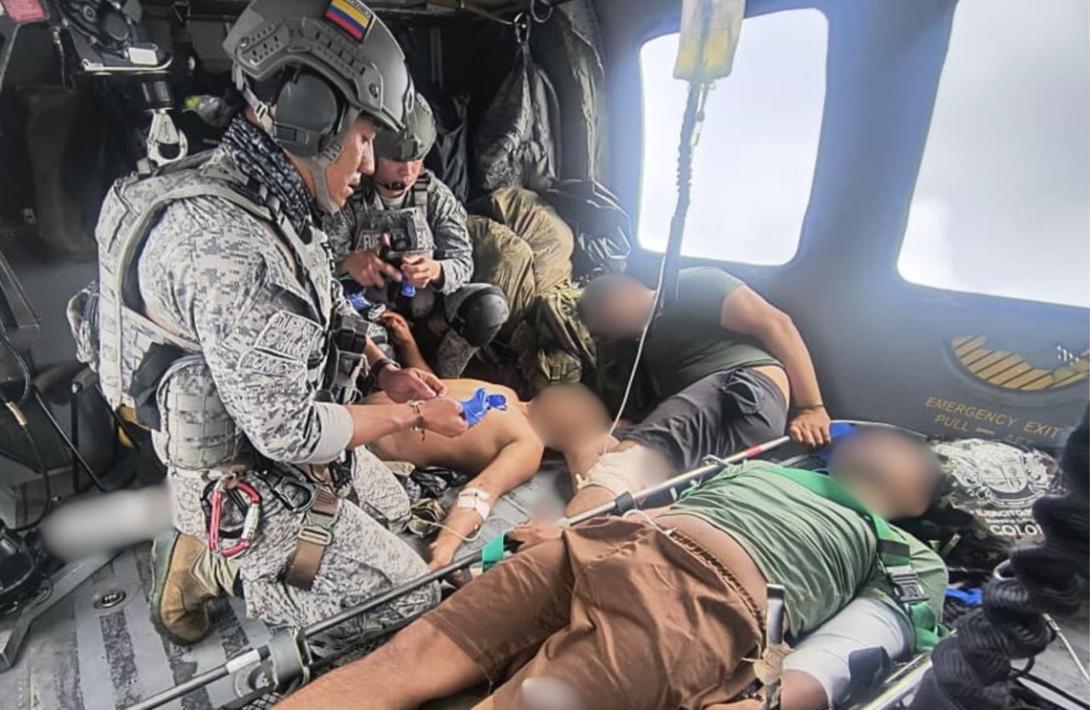
Within the framework of the Colombian internal armed conflict, the Anti-Personnel Mines, Unexploded Ordnance and Explosive Devices, have generated multiple victims who have suffered physical damages that include amputations of their limbs, hearing or visual impairment, skin damage from shrapnel, burns, among others; as well as psychological damage. Consequently, the use of these devices constitutes a violation of International Humanitarian Law (IHL), since they are unconventional and indiscriminate weapons used by illegal armed groups, with the aim of causing terror and generating disproportionate damage.
The regulation and prohibition of these devices, are contained in the Geneva Protocols and the Convention on Certain Conventional Weapons, described in Protocol II Amended in 1996, which restricts the use and prohibit those designed to cause unnecessary damage, as well as in Protocol V of 2003, which establishes the obligation to clean up and destroy these explosive remnants after the end of hostilities to protect the inhabitants.
With reference to Colombia, this prohibited methods of warfare has been used indiscriminately by Illegal Organized Armed Groups for more than 70 years during the internal armed conflict, leaving an upward trend in recent years, driven by the reconfiguration of the armed conflict and the territorial dispute among illegal groups, especially in the municipalities of Antioquia, Nariño department, Meta department, Norte de Santander department and Caquetá (Presidency of the Republic of Colombia, 2026).
Since 2005, April 4 has been commemorated as the International Day for Anti-Personnel Mine Awareness, as a date to send a message to the world about the dire consequences of the use of Anti-Personnel Mines as a method of combat in armed conflicts (National Center of Historical Memory and Observatory of Memory and Conflict, 2025).
On the other hand, according to the Unit for Comprehensive Assistance and Reparation to Victims, by 2026, approximately 12,826 wounded people have been reported, of which 7,514 belong to the Military Forces, and 13 to the Colombian Aerospace Force. These figures reflect not only the magnitude of the damage, but in the same way the urgency of recognizing and dignifying those who have survived this tragedy.
For the Colombian Air Force, it is essential to make the survivors of anti-personnel mines visible, because their experience embodies the human cost of the conflict and the need of strengthening the acts aimed at recognition, comprehensive reparation and their dignity. Doing so CAF contributes to building memory, justice and a collective commitment to non-repetition.
References:
Observatory of Memory and Conflict. April 04: International anti-personnel mine awareness day, https://micrositios.centrodememoriahistorica.gov.co/observatorio/portal…
Presidency of the Republic of Colombia. (2026). Statistics of Comprehensive Assistance to the Victims. https://www.accioncontraminas.gov.co/Estadisticas/estadisticas-de-victi…
Unity for the victims. (2026). Unique Registry for Victims. https://datospaz.unidadvictimas.gov.co/búsqueda-unico-de-victimas/
Source: Colombian Aerospace Force - Strategic Department Legal Affairs and Human Rights


