

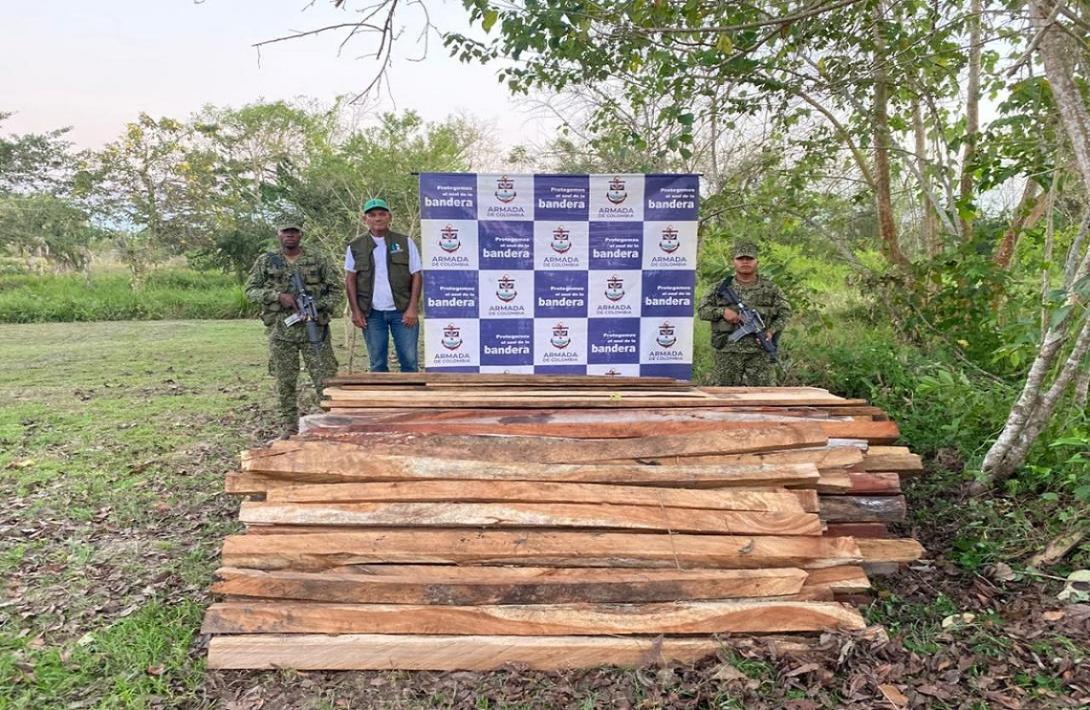
In one of the operations, more than 22 cubic meters of illegally extracted wood were in the same way found.
Within the framework of territorial control and environmental protection operations, the Colombian Navy, through units attached to the Navy Infantry Brigade No. 1 of the Caribbean Naval Force, in coordination with environmental authorities and the National Police, reported the recovery of 147 specimens of wildlife during the first 30 days of the year 2026.
These acts were carried out in different municipalities of the department of Antioquia, Bolívar department, Cesar department, Chocó department, Córdoba department, Santander department and Sucre, as part of the institutional strategy to prevent and counter environmental crimes that hit the biodiversity of the Colombian Caribbean.
Among the rescued specimens there are sloth bears, morrocoy turtles, boas, iguanas, opossums, babillas (lizards), parrots, parakeets, canaries, as well as other specimens of birds, mammals and reptiles, which were in conditions of captivity or were being transported irregularly for illegal marketing purposes.
Wildlife trafficking is criminalized in Colombia, in accordance with article 328A of the Criminal Code, which punishes those who illegally appropriate, keep, transport, sell or exploit wildlife specimens, with prison sentences of up to 135 months and fines of up to 40,000 monthly legal minimum wages in force.
Simultaneously, it was possible to confiscate more than 22 cubic meters of illegally extracted wood, corresponding to forest specimens such as ceiba, mahogany, thorny cedar and granadillo, thus contributing to the protection of the natural and forest resources of the region.
The Colombian Navy, through the Caribbean Naval Force, ratifies its permanent commitment to the conservation of the environment and the protection of biodiversity, through coordinated operations that manage to prevent and counteract the illegal trafficking of specimens. It in the same way invites citizens to denounce any behavior against wildlife and the ecological balance of the country.
Source: Press – Caribbean Naval Force


